



Key Takeaways
- Your business structure affects personal liability, tax treatment, admin burden and how easily you can grow or bring in partners.
- Sole traders suit simple, early-stage businesses; companies offer more protection and room to scale but come with greater compliance obligations.
- You're not locked in - many owners start simple and transition to a company structure as income, risk and complexity increase.

Table of Contents
- How to Choose a Business Structure in Australia: Sole Trader vs Partnership vs Company
- What Is a Business Structure?
- The 4 Most Common Business Structures in Australia
- Sole Trader vs Company: What's the Real Difference?
- Decision Drivers: How to Choose the Right Structure for You
- Mini Scenarios: What Would You Choose?
- What Changes If You Switch to a Company Later?
- What You'll Need Next After Choosing Your Structure
- Common Mistakes When Choosing a Legal Structure
- Frequently Asked Questions
How to Choose a Business Structure in Australia: Sole Trader vs Partnership vs Company
Working out how to choose a business structure can feel confusing, especially when each option carries different risks and responsibilities. The structure you choose affects how you're taxed, how much personal risk you take on, how much admin is involved and how easily your business can grow.
No approach is 'the best' and learning the mechanics of each can help you to make an informed decision without getting stuck in legal complexities.
What Is a Business Structure?
A business structure is how your business is set up legally and financially. It determines who is responsible for decisions, how money is earned and taxed and how risk is managed if something goes wrong.
This choice shapes how your business operates from day one, including your reporting obligations, tax treatment and level of personal liability. It also affects how easy it is to grow, bring in partners or access funding later.
This is why knowing how to choose a business structure best suited to your long-term strategy helps to avoid unnecessary changes or complications as your business evolves.
The 4 Most Common Business Structures in Australia
Entrepreneurs in Australia have four main business structures to choose from. Each one changes how your business operates, how risk is handled and how much administration is involved.
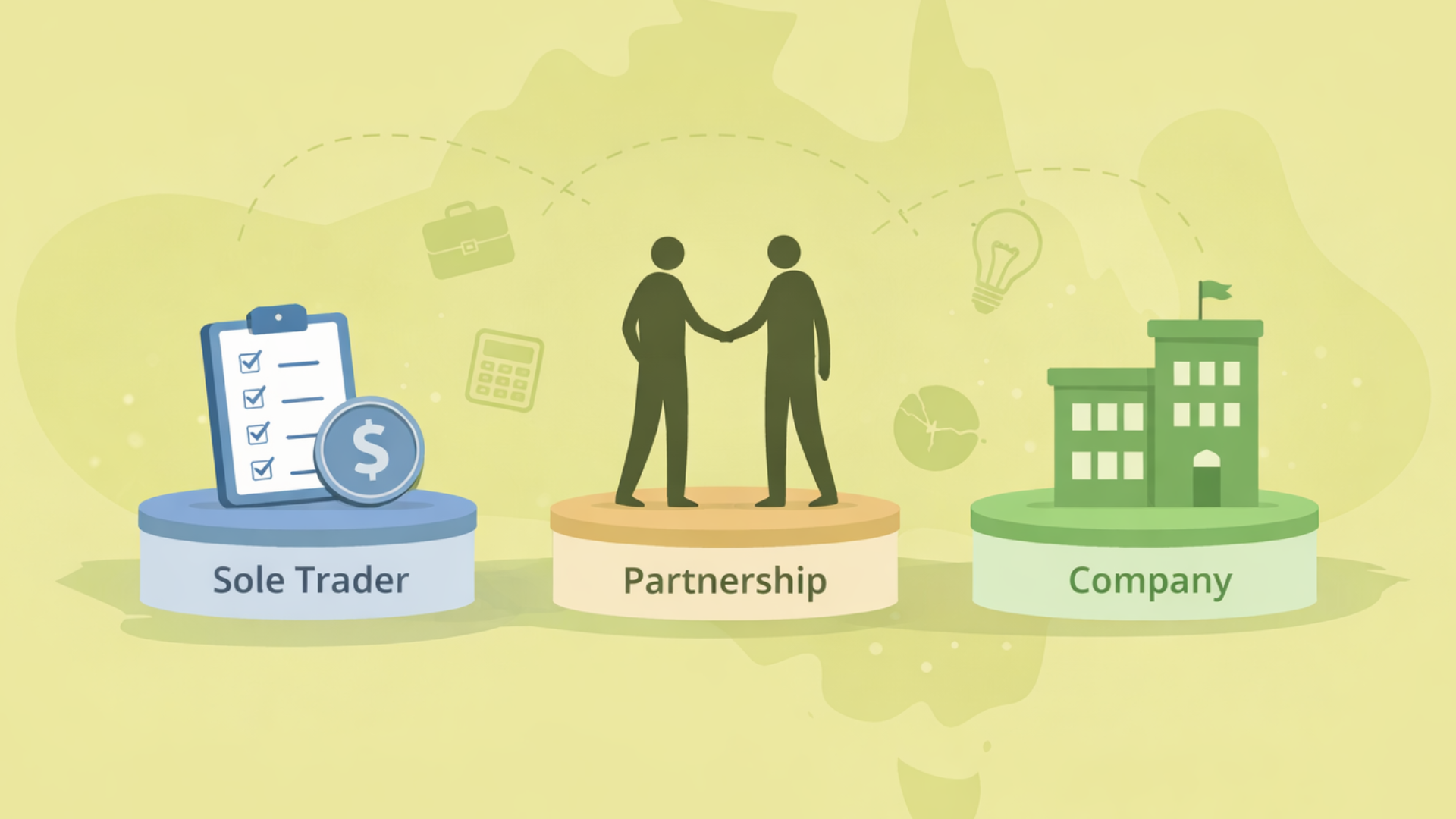
Most small business owners will choose between the first three, depending on their ambitions and appetite for risk:
- Sole trader – You run the business as an individual and retain full control or you take on all personal risk. For example, a freelance designer or local tradie starting out.
- Partnership – Two or more people run the business together by sharing income, decisions and responsibility.
- Company - A company generally limits personal liability by separating you from the business, although directors may still have obligations in certain situations.
- Trust - A more complex structure often used for asset protection or tax planning and sometimes suited to more established or structured businesses.
Sole Trader vs Company: What's the Real Difference?
When comparing sole trader vs company, the real difference comes down to simplicity versus protection. A sole trader is quick to set up and easy to manage, while a company introduces more structure but separates your personal assets from business risk.
We recommend considering the following if you're contemplating sole trader vs company:
- Liability – As a sole trader, you're personally responsible for debts and legal issues. A company limits this risk by separating you from the business.
- Set up and admin – Sole traders have minimal setup and fewer ongoing obligations. Companies require ASIC registration, record keeping and annual compliance.
- Tax – Sole traders pay tax at individual rates, while companies are taxed at a fixed company rate.
- Growth – Sole traders suit smaller or early-stage businesses, while companies are better suited to scaling, hiring or bringing in partners.
Decision Drivers: How to Choose the Right Structure for You
When deciding how to choose a business structure, the right option comes down to how you plan to operate and not just what feels easiest at the start.
There's no one-size-fits-all answer or the following factors can help guide your decision:
- Risk tolerance – If taking on personal liability feels uncomfortable, a company may be more suitable as it separates your personal assets from business risk.
- Expected income – Lower or uncertain income may suit a sole trader setup, while consistent or growing revenue can justify a more structured approach.
- Growth plans – If you plan to hire, scale or bring in investors, a company structure makes expansion easier to manage.
- Number of people involved – If you're starting with others, consider how decisions, profits and responsibilities will be shared from day one.
- Admin tolerance – If you prefer simplicity, a sole trader structure reduces compliance, while a company requires ongoing reporting and record keeping.
Mini Scenarios: What Would You Choose?
A self-employed plumber in Brisbane picking up local jobs on their own will often start as a sole trader. The setup is simple, the admin stays light and it suits someone who is testing demand or building income gradually.
Two friends launching a mobile coffee cart in Melbourne may lean toward a partnership. They're both involved in the day-to-day work, sharing costs, decisions and profits from the beginning.
A Gold Coast eCommerce brand turning over $220,000 a year and preparing to hire staff may decide a company structure makes more sense. In a company vs sole trader decision, stronger asset protection and room to grow often become more important once revenue and risk increase.
What Changes If You Switch to a Company Later?
You are not locked into your initial decision forever. You can change your structure as your business grows and many owners start simple before moving to a company. This is a common step once revenue, risk or complexity increases.
Switching means registering a new company, setting up new compliance obligations and transferring your operations across. While it involves some admin, it's often more practical to transition as you grow, rather than starting with a more complex structure too early.
What You'll Need Next After Choosing Your Structure
Once you’ve worked through how to choose a legal structure for your business, the next step is setting everything up correctly. What you need to do depends on the structure you’ve chosen. Most businesses will need an ABN to operate and meet tax obligations and may also need to register a business name if trading under a name other than their own.
If you plan to trade under a name, you’ll need to check and register your business name in Australia. If you’ve chosen a company structure, you’ll also need to register a company. As your revenue grows, you may also need to register for GST to stay compliant as you approach $75,000 per annum.
Common Mistakes When Choosing a Legal Structure
Many business owners make the same avoidable mistakes early on and we highly recommend:
- Choosing a structure based only on simplicity and not considering long-term needs
- Ignoring personal risk and potential liability
- Starting a partnership without clearly defining roles and responsibilities
- Setting up a company without fully understanding the additional administrative and compliance responsibilities involved
- Not reviewing your structure as your business grows
Frequently Asked Questions
Is a company better than a sole trader in Australia?
A company is not always better. It offers more protection and growth potential or a sole trader setup is simpler and easier to manage. The right choice depends on your risk level, income and future plans.
Can I change from sole trader to a company later?
Yes, you can switch to a company as your business grows. This usually involves registering a new company and transferring your operations across.
Do I pay less tax as a company?
Not always. While companies are taxed at a fixed rate, profits distributed to individuals may still be taxed depending on circumstances.
What structure is best for two business partners?
A partnership is the simplest option for two people starting out, as it allows you to share income and responsibilities. If you want more protection or plan to grow, a company may be more suitable.
Do I need an ABN for all business structures?
Yes, most business structures need an ABN to operate, invoice clients and meet tax obligations.

Miralda Ishkhanian

Chief Operating Officer





 1300 587 203
 support@honcho.com
 Monday - Friday 9AM - 8PM AEST
 Suite 703, Level 7 The Trust Building 155 King Street, Sydney NSW 2000